As April brings forth longer days and a renewed sense of momentum, the behavioral cognition field is similarly gaining traction, with researchers embracing fresh perspectives on how decisions take shape. Much like the season invites exploration before settling into routine, this year’s work reflects a growing focus on how internal strategies are revealed through action. In this spirit, the following publication review explores how emerging touchscreen technologies are capturing the subtle motor signatures of decision-making in motion.
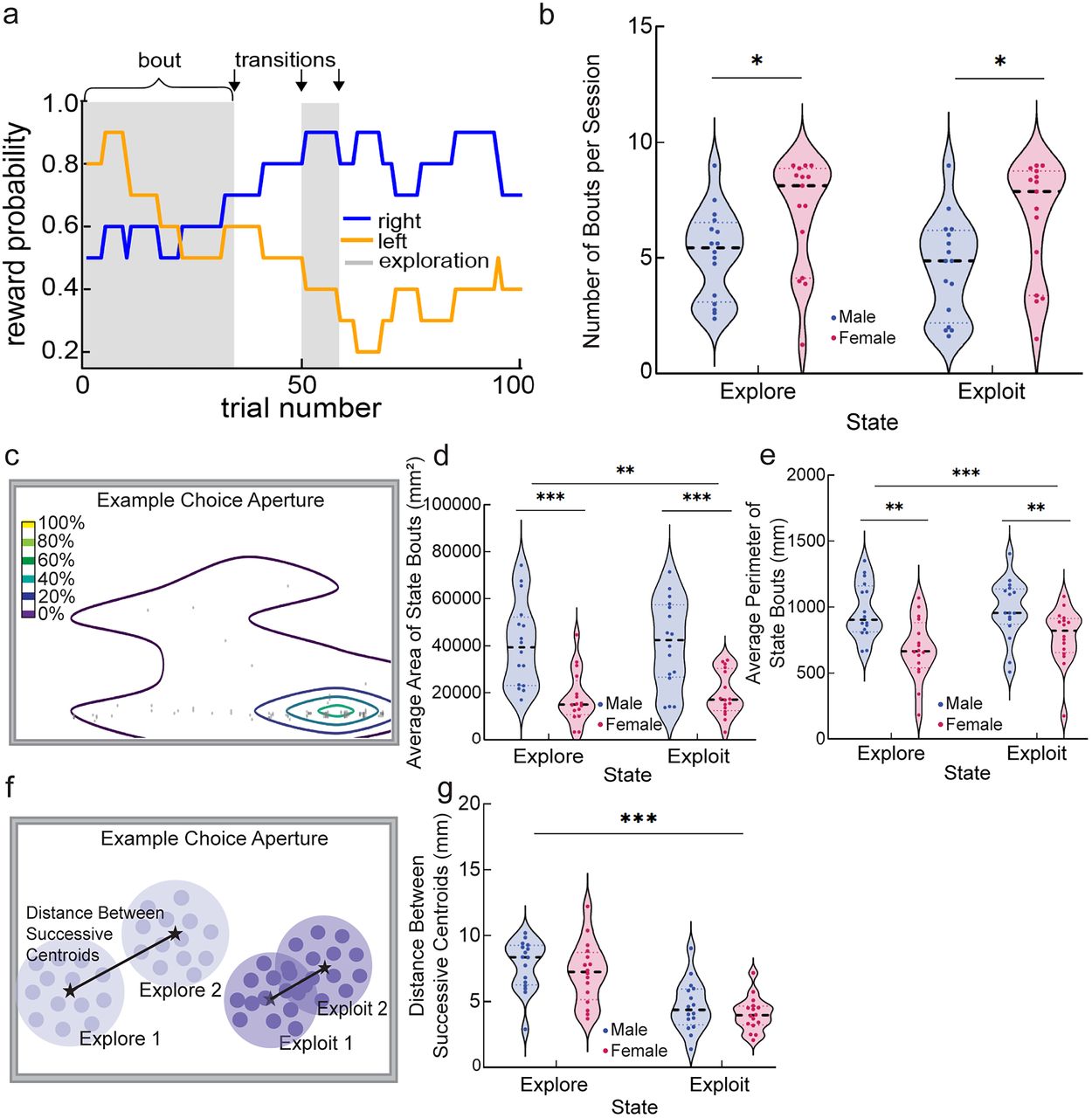
Note: Featured image from Mueller et al., (2025) (licensed under CC BY 4.0) reveals how bouts of exploit choices are closer to each other and occupy a smaller area than bouts of explore choices.
Touchscreen Response Precision is Sensitive to the Explore/Exploit Trade-Off
Reward-guided tasks have long provided a window into how animals balance competing strategies, yet these internal states are typically inferred from patterns of choice rather than the actions themselves. Despite the increasing use of touchscreen-based paradigms, it remains unclear whether the fine-grained motor dynamics of a decision—such as the spatial variability of a touch—reflect these underlying processes. To address this gap, the study by Mueller et al. (2025) examines whether touchscreen response precision in mice varies systematically with internal state, prior reward, and sex.
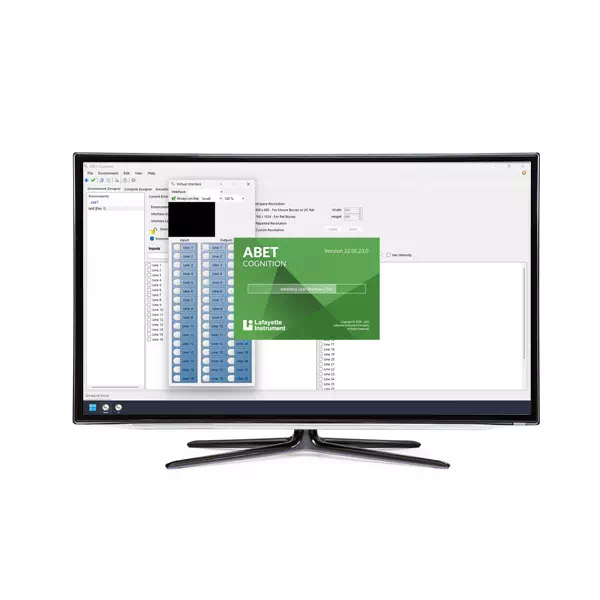
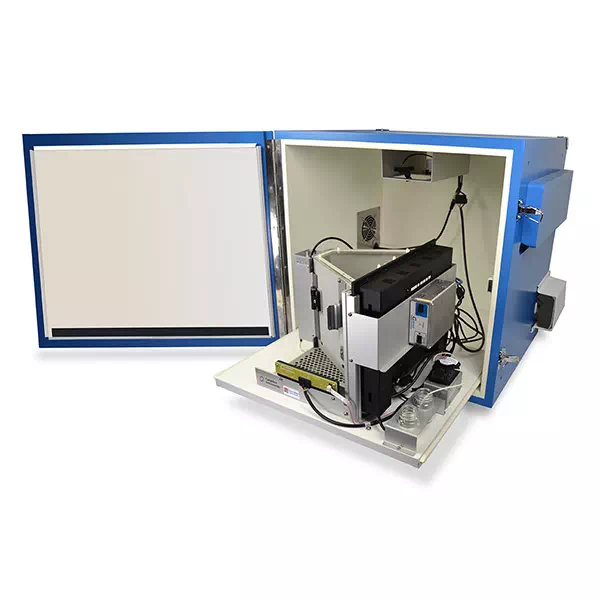
Researchers used 32 male and female 129/B6J F1 mice trained in a multistage touchscreen paradigm that culminated in a two-arm restless bandit task with dynamically shifting reward probabilities. After progressing through deterministic and probabilistic training schedules, mice completed daily sessions requiring continuous adaptation to stochastic reward contingencies. Behavioral outputs, including choice, response latency, and precise x–y touchscreen coordinates, were collected using Bussey-Saksida Touchscreen Chambers from Campden Instruments. The infrared beam technology and ABET software enabled high-resolution spatial and temporal tracking of nose poke responses. This integrated platform supported detailed analysis of movement patterns and decision-making behavior across the touchscreen environment.
Mice continuously alternated between exploratory and exploitative states. Modelling revealed that exploit behavior was marked by more consistent, less variable actions compared to broader spatial sampling during exploration. These responses were more tightly clustered, occurred farther from the screen center, and were executed more quickly indicating a shift toward automated, stereotyped responding. Prior reward further reinforced this precision, while female mice exhibited lower variability and faster responses overall.
Using Bussey-Saksida Touchscreen Chambers, high-resolution coordinate tracking further revealed that exploratory responses were biased toward the center of the screen. This was consistent with deliberative, trial-and-error–like behavior, whereas exploitative responses remained confined to smaller, repeatable regions. This level of spatial precision enabled the identification of distinct behavioral “bouts,” highlighting how action patterns stabilize during exploitation but remain diffuse during exploration.
Conclusions
Together, these results by Mueller et al. (2025) demonstrate that internal decision states, reward history, and sex shape the spatial and temporal structure of actions, with exploitation reflecting a transition toward efficient, stereotyped behavior. More broadly, this work highlights how fine-scale behavioral measurements can reveal the underlying organization of adaptive decision-making in dynamic environments.
Related Products
Upcoming Events
-
Symposium of the Young Physiologists
Date: April 8, 2026 -
AALAS District 8 Meeting
Date: April 8-10, 2026 -
American Physiology Summit (APS) 2026
Date: April 17-22, 2026