Glioblastomas are heavily associated with lipid droplet (LD) accumulation, and increasing evidence points to LDs promoting tumor survival under hostile conditions. However, the mechanisms involving LD formation, uptake, and storage are still not clearly understood. In a new Nature article, Bång-Rudenstam et al. sought to elucidate these molecular mechanisms within the tumor microenvironment. They focused on acidosis as a tumor stressor and identified that LD accumulation was linked to the formation of a chondroitin sulfate (CS)-enriched glycocalyx (or a cell coat made of glycoconjugates).
Note: Featured image from Bång-Rudenstam., (2026) (licensed under CC BY 4.0) reveals CS-glycocalyx encapsulation is an adaptive response to tumour acidosis.
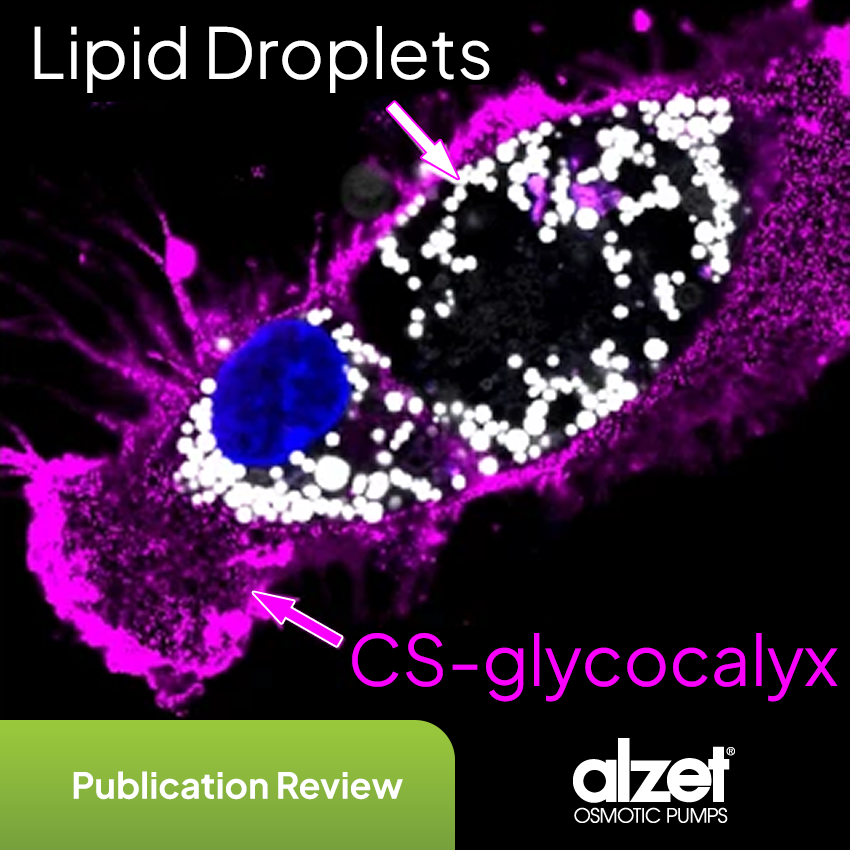
Tumour acidosis remodels the glycocalyx to control lipid scavenging and ferroptosis
For in-vivo targeting, ALZET® Osmotic Pumps were used for delivery of a CSPG inhibitor (blocks CS-glycocalyx formation) and DGAT1 inhibitor (blocks LD formation) to the cerebellum. ALZET pumps were chosen specifically considering the chemical properties of the CSPG inhibitor and would allow for it to cross the blood-brain barrier.
Process
- Xenograft mouse models were generated by injecting PDX U3054MG cells, CDX U87MG7.4/NA cells, or CDX 6.4/AA cells into the brains of female NSG mice at 5-7 weeks.
- ALZET Pump Models 1007D or 1002 containing the CSPG inhibitor or DGAT1 inhibitor were then implanted subcutaneously into the anesthetized mice.
- Catheters were connected to the pumps to allow for direct intratumoral delivery of compounds to the brain.
- Treatment continued for 7 or 14 days, after which the pumps were removed, and the mice were monitored for neurological distress.
Conclusion
Notably, treatment with these inhibitors prolonged survival in xenografted mice. From this, the researchers identified that tumor acidosis adaptation involves:
- LDs buffering toxic lipids
- CS-rich glycocalyx acting as a shield to limit lipid particle uptake and ferroptosis
This research is important because it points to a glycosylation process involving lipid uptake, storage, and survival in acidic tumors. The glycocalyx, acting as a shield in these acidic tumor environments, can thus be a potential therapeutic target. This process, coupled with intratumoral delivery capable with ALZET Pumps, researchers continue to reveal promising findings for cancer therapeutics and treatments.
Interested in employing ALZET Osmotic Pumps?
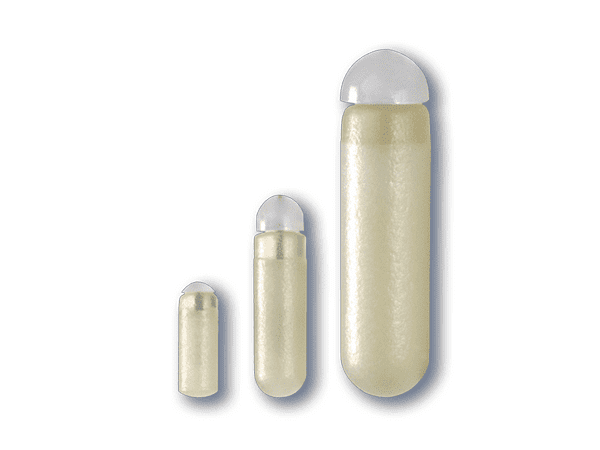
ALZET Pumps have been cited in thousands of research studies including a large number of cancer research studies.
Visit the ALZET website to determine which pumps would best suit your research!
Upcoming Events
-
AALAS National Meeting 2026
Date: October 25-29, 2026 -
Society for Neuroscience 2026
Date: November 14-18, 2026 -
American Society for Gravitational and Space Research (ASGSR) 2026
Date: December 2-5, 2026